

Simon Schama's epic history reaches the 18th century, where an economic explosion gives birth to the consumer society and agriculture becomes big business.
- TV-Recordings
- English subtitles
- 60
Simon Schama's epic history reaches the 18th century, where an economic explosion gives birth to the consumer society and agriculture becomes big business.

A series of documentaries examining the history of local people, places, inventions and events that changed the world. Adam Hart-Davis tells the remarkable story of Thomas Newcomen, the Devon man who invented the world's first working steam-powered engine.
- TV-Recordings
- Engineering
- History
- TV-Recordings
- English subtitles
- 30
A series of documentaries examining the history of local people, places, inventions and events that changed the world. Adam Hart-Davis tells the remarkable story of Thomas Newcomen, the Devon man who invented the world's first working steam-powered engine.

The tale reaches the dramatic events of Henry VIII\'s Reformation and the battles of the English Civil War. We track Kibworth\'s 17th century dissenters, travel on the Grand Union Canal and meet an 18th century feminist writer from Kibworth who was a pioneer of children\'s books.
- TV-Recordings
- History
- TV-Recordings
- No subtitles
- 60
The tale reaches the dramatic events of Henry VIII\'s Reformation and the battles of the English Civil War. We track Kibworth\'s 17th century dissenters, travel on the Grand Union Canal and meet an 18th century feminist writer from Kibworth who was a pioneer of children\'s books.
-
Seven Wonders of the Industrial World - Episode 01: The Great Ship
-
Christopher Spencer
At a time when most ships were built to traditional designs in wood, and powered by sail, Isambard Kingdom Brunel’s colossal ship, the Great Eastern, was almost 700 feet long and built of iron. His vision was that it should carry 4,000 passengers, in magnificent style, as far as the Antipodes - without needing to refuel.
- TV-Recordings
- Built Environment & Architecture
- Engineering
- TV-Recordings
- No subtitles
- 8
At a time when most ships were built to traditional designs in wood, and powered by sail, Isambard Kingdom Brunel’s colossal ship, the Great Eastern, was almost 700 feet long and built of iron. His vision was that it should carry 4,000 passengers, in magnificent style, as far as the Antipodes - without needing to refuel.

In 1869, John Roebling won the contract to build the largest bridge in the world, the Brooklyn Bridge in New York. It was to stretch 1,600 feet, in one giant leap, across the wide and turbulent East River that separates New York from Brooklyn.
- TV-Recordings
- Built Environment & Architecture
- Engineering
- TV-Recordings
- No subtitles
- 45
In 1869, John Roebling won the contract to build the largest bridge in the world, the Brooklyn Bridge in New York. It was to stretch 1,600 feet, in one giant leap, across the wide and turbulent East River that separates New York from Brooklyn.

-
Seven Wonders of the Industrial World - Episode 03: The Bell Rock Lighthouse
-
Christopher Spencer
In 1800 Robert Stevenson set about building a lighthouse on the deadly Bell Rock reef off the east of Scotland.
- TV-Recordings
- Built Environment & Architecture
- Engineering
- TV-Recordings
- No subtitles
- 40
In 1800 Robert Stevenson set about building a lighthouse on the deadly Bell Rock reef off the east of Scotland.
By the middle of the 19th century, the benefits brought by the countless advances of the Industrial Age were gradually beginning to reach America,
- TV-Recordings
- Engineering
- History
- TV-Recordings
- No subtitles
- 45
By the middle of the 19th century, the benefits brought by the countless advances of the Industrial Age were gradually beginning to reach America,

-
Seven Wonders of the Industrial World - Episode 05: The Sewer King
-
Edward Bazalgette
In the summer of 1858, while the Great Eastern was being fitted out for her maiden voyage, London was in the grip of a crisis known as the 'Great Stink'. The population had grown rapidly during the first half of the 19th century, yet there had been no provision for sanitation.
- TV-Recordings
- Engineering
- History
- TV-Recordings
- No subtitles
- 12
In the summer of 1858, while the Great Eastern was being fitted out for her maiden voyage, London was in the grip of a crisis known as the 'Great Stink'. The population had grown rapidly during the first half of the 19th century, yet there had been no provision for sanitation.

Having completed the building of the Suez Canal in 1869, Ferdinand de Lesseps dreamed of an even bolder scheme: the Panama Canal. Lesseps decided he would cut a path across the Isthmus of Panama,and thus unite the great oceans of the Atlantic and Pacific, making the long journey round South America unnecessary.
- TV-Recordings
- Engineering
- TV-Recordings
- No subtitles
- 45
Having completed the building of the Suez Canal in 1869, Ferdinand de Lesseps dreamed of an even bolder scheme: the Panama Canal. Lesseps decided he would cut a path across the Isthmus of Panama,and thus unite the great oceans of the Atlantic and Pacific, making the long journey round South America unnecessary.
As pioneers explored and found their way across the vast continent of America, they were frequently stopped by poor or hostile environments such as the desert regions of Arizona and Nevada.
- TV-Recordings
- Engineering
- History
- TV-Recordings
- No subtitles
- 10
As pioneers explored and found their way across the vast continent of America, they were frequently stopped by poor or hostile environments such as the desert regions of Arizona and Nevada.

The catalyst to Britain's Industrial Revolution was the slave labour of orphans and destitute children. In this shocking and moving account of their exploitation and eventual emancipation, Professor Jane Humphries uses the actual words of these child workers.
- TV-Recordings
- History
- TV-Recordings
- English subtitles
- 60
The catalyst to Britain's Industrial Revolution was the slave labour of orphans and destitute children. In this shocking and moving account of their exploitation and eventual emancipation, Professor Jane Humphries uses the actual words of these child workers.
A film that looks at the genius of JMW Turner in a new light. There is more to Turner than his sublime landscapes - he also painted machines, science, technology and industry. Turner's life spans the Industrial Revolution, he witnessed it as it unfolded and he painted it.
- TV-Recordings
- Art & Design
- TV-Recordings
- No subtitles
- 60
A film that looks at the genius of JMW Turner in a new light. There is more to Turner than his sublime landscapes - he also painted machines, science, technology and industry. Turner's life spans the Industrial Revolution, he witnessed it as it unfolded and he painted it.
Michael Wood uncovers the extraordinary tale of the Industrial Revolution.
- TV-Recordings
- History
- TV-Recordings
- No subtitles
- 60
Michael Wood uncovers the extraordinary tale of the Industrial Revolution.

-
Why the Industrial Revolution Happened Here
-
Michael Tuft
Professor Jeremy Black explains the unique economic, social and political factors that helped Britain transform itself almost entirely by the 19th century.
- TV-Recordings
- English subtitles
- 58
Professor Jeremy Black explains the unique economic, social and political factors that helped Britain transform itself almost entirely by the 19th century.
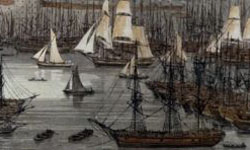
Professor Jeremy Black examines one of the most extraordinary periods in British history: the Industrial Revolution. He explains the unique economic, social and political conditions that by the 19th century, led to Britain becoming the richest, most powerful nation on Earth. It was a time that transformed the way people think, work and play forever.
- TV-Recordings
- Engineering
- History
- TV-Recordings
- No subtitles
- 60
Professor Jeremy Black examines one of the most extraordinary periods in British history: the Industrial Revolution. He explains the unique economic, social and political conditions that by the 19th century, led to Britain becoming the richest, most powerful nation on Earth. It was a time that transformed the way people think, work and play forever.